WebAssembly’s Rising Influence in Modern Frontend Development

Written by
admin

Get the oars in the water and start rowing. Execution is the single biggest factor in achievement so the faster and better your execution.
Swift vs Kotlin: Which Language Will Dominate in 2025 and Beyond?
admin
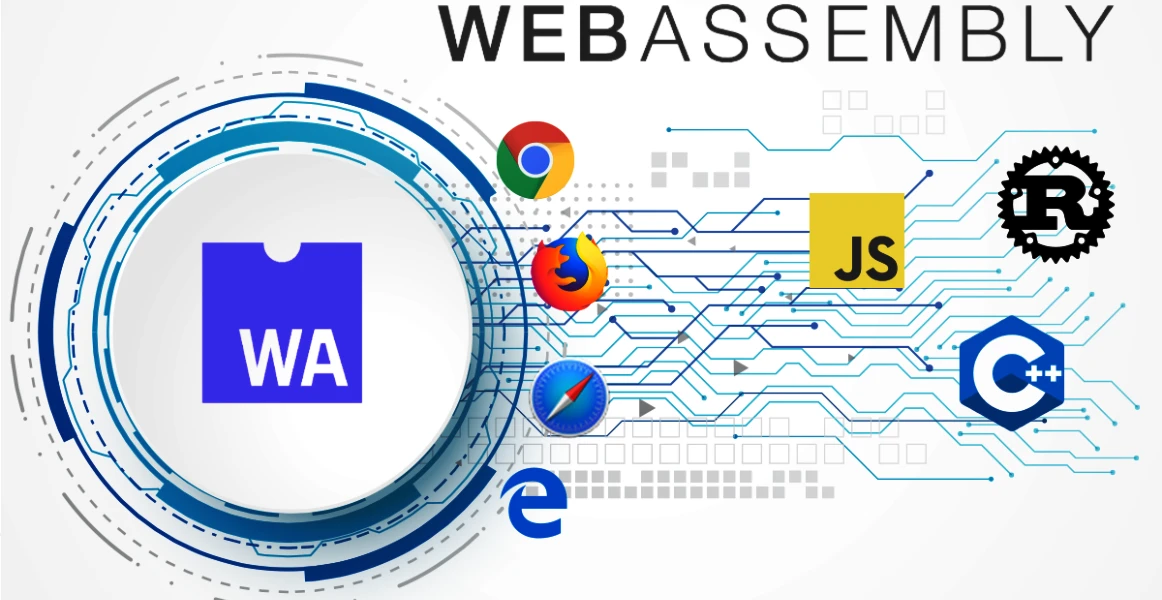
In today’s frontend development landscape, performance is everything. While JavaScript remains the backbone of the web, developers are increasingly turning to faster alternatives for handling performance-critical tasks—and that’s where WebAssembly (Wasm) steps in.
WebAssembly is a low-level binary instruction format designed to run in the browser at near-native speed. It enables developers to compile code from languages like C, C++, and Rust, allowing high-performance modules to run seamlessly alongside JavaScript. This makes Wasm a game-changer for building complex, compute-heavy web applications like games, video editors, and data visualization tools.
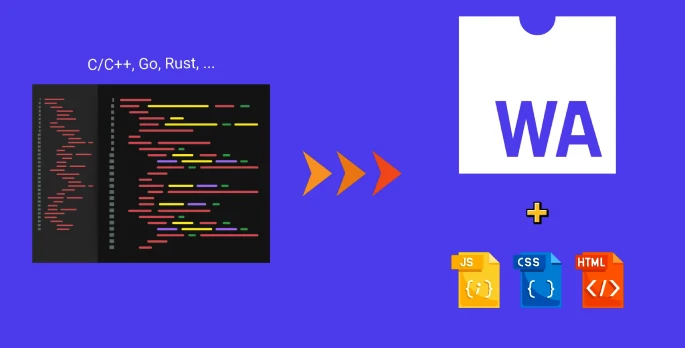
 WebAssembly (Wasm) is a powerful, low-level,
assembly-like language designed with a compact binary format for
blazing-fast execution. It enables developers to run code
written in languages like C, C++, Rust, and more directly in the
browser—delivering performance that rivals native applications.
WebAssembly shines in scenarios where performance and efficiency
are critical. Consider using Wasm when you:
WebAssembly (Wasm) is a powerful, low-level,
assembly-like language designed with a compact binary format for
blazing-fast execution. It enables developers to run code
written in languages like C, C++, Rust, and more directly in the
browser—delivering performance that rivals native applications.
WebAssembly shines in scenarios where performance and efficiency
are critical. Consider using Wasm when you:

Handling Compute-Heavy Tasks: From large-scale data analysis and machine learning inference to encryption, compression, and file format conversions, WebAssembly enables intensive tasks to run efficiently right in the browser.
WebAssembly isn’t here to replace JavaScript—instead, it
opens doors to a whole new level of performance that traditional
frontend tools couldn't reach. It's built for compute-heavy operations
and, when used alongside JavaScript, delivers a powerful combination of
speed and flexibility.
As modern web applications demand more from the browser, Wasm is poised
to play a vital role in building high-performance experiences. The best
approach? Start small, experiment with performance-critical features,
and explore how WebAssembly can take care of the heavy lifting behind
the scenes.
