Revolutionary Display Technology Sets New Standard for Competitive Gaming

Written by
admin

Get the oars in the water and start rowing. Execution is the single biggest factor in achievement so the faster and better your execution.
Revolutionary Display Technology Sets New Standard for Competitive Gaming

In a stunning announcement at Gamescom 2025, Asus Republic of Gamers has unveiled the ROG Swift OLED PG27AQWP-W, now officially the world's fastest OLED gaming monitor with an unprecedented 720Hz refresh rate. This groundbreaking display combines cutting-edge panel technology with striking aesthetic design, potentially redefining the competitive gaming landscape.
The monitor made its debut alongside two other OLED models—the ROG Strix OLED XG27AQWMG and the updated Strix OLED XG27AQDMG Gen 2—further strengthening Asus's position as the global market leader in OLED gaming monitors. Industry analysts are hailing the announcement as a significant leap forward in display technology that addresses longstanding limitations of OLED panels while pushing refresh rates to previously unimaginable heights.
At the heart of the PG27AQWP-W's extraordinary performance lies LG Display's revolutionary 4th-generation Tandem WOLED technology. This innovative panel architecture features two light-emitting layers working in concert to deliver substantial improvements across key performance metrics:
 15% higher peak brightness (up to 1500 nits) compared to previous-generation WOLED monitors
25% wider color volume than equivalent QD-OLED panels
60% longer lifespan through reduced brightness degradation and burn-in risk
Reduced power consumption despite significantly increased brightness output
15% higher peak brightness (up to 1500 nits) compared to previous-generation WOLED monitors
25% wider color volume than equivalent QD-OLED panels
60% longer lifespan through reduced brightness degradation and burn-in risk
Reduced power consumption despite significantly increased brightness output
The tandem structure represents a fundamental shift in OLED design philosophy, addressing traditional concerns about OLED longevity while simultaneously enhancing performance characteristics. This technological leap allows the monitor to maintain its exceptional speed without compromising on image quality or panel durability.
The ROG Swift OLED PG27AQWP-W offers gamers unprecedented flexibility through its innovative dual-mode functionality. Users can seamlessly switch between:
Native QHD (2560 × 1440) resolution at a blistering 540Hz refresh rate
HD (720p) resolution at an astonishing 720Hz refresh rate
This flexibility allows competitive gamers to prioritize either resolution or refresh rate based on their specific needs for different games and scenarios. The monitor's 0.03ms gray-to-gray response time ensures virtually instantaneous pixel transitions, eliminating motion blur and ghosting even in the most fast-paced gaming scenarios.
Beyond its incredible speed, the monitor delivers exceptional image quality with VESA DisplayHDR 500 True Black certification, 99.5% DCI-P3 color gamut coverage, true 10-bit color depth, and Delta (E< 2) color accuracy. These specifications make the display suitable not only for gaming but also for color-critical creative work, including photo and video editing.
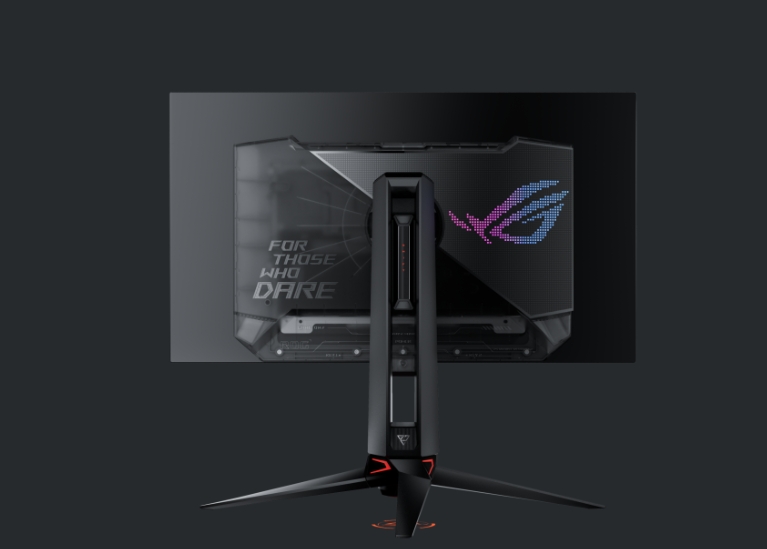
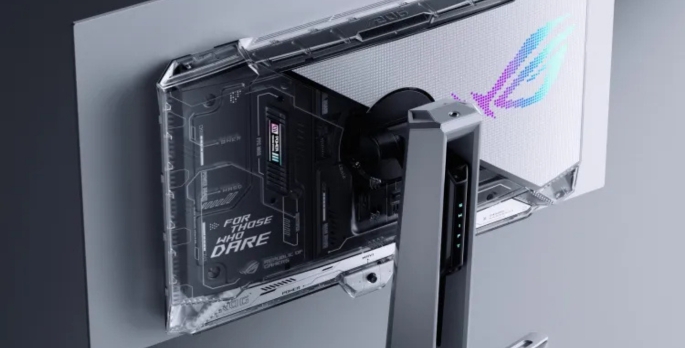
Asus has complemented the monitor's technical prowess with a striking design that departs from the conventional black-box aesthetic dominant in gaming peripherals. The PG27AQWP-W features:
A sophisticated silver finish with translucent elements on the rear enclosure
A reimagined stand design that provides stability while adding visual flair
Customizable RGB lighting featuring the ROG "Fearless Eye" logo with Aura Sync compatibility
A tripod socket for content creators who need to mount cameras or other accessories
Addressing longstanding concerns about OLED longevity, particularly in gaming scenarios with static UI elements, Asus has implemented a comprehensive OLED Care Pro protection suite. The most notable feature is the innovative Neo Proximity Sensor, which uses wavelength detection to accurately measure the user's distance from the monitor.
When the sensor detects that the user has stepped away, it automatically switches the display to a black screen, preventing static image retention during periods of inactivity. The detection distance is customizable to accommodate different viewing setups and preferences. This system reactivates the display instantly when the user returns, creating a seamless protective mechanism that operates without user intervention .
.
Asus typically backs its OLED monitors with a three-year warranty that specifically covers burn-in protection, providing additional peace of mind for consumers concerned about long-term reliability.
While other manufacturers, including Koorui and HKC, have announced monitors with marginally higher refresh rates (750Hz), these models utilize older TN panel technology that cannot compete with the PG27AQWP-W's color accuracy, brightness, viewing angles, or overall image quality. More significantly, these competing models lack the dual-mode functionality that allows the Asus monitor to switch between high-resolution and ultra-high-refresh-rate operation.
The announcement solidifies Asus's position at the forefront of the high-performance gaming monitor market, particularly in the rapidly expanding OLED segment. Industry tracking has consistently identified Asus as the number one OLED gaming monitor brand globally by market share, a position that appears strengthened by this latest announcement.
Recognizing the bandwidth requirements of such high refresh rates, Asus has equipped the PG27AQWP-W with DisplayPort 2.1a UHBR20 support, delivering a full 80Gbps of bandwidth. This next-generation connectivity standard ensures sufficient headroom for both the 540Hz QHD and 720Hz HD modes without requiring compression that could impact image quality.
The monitor also includes HDMI 2.1 ports for compatibility with modern gaming consoles and other multimedia devices, plus a USB hub for peripheral connectivity. This comprehensive connectivity suite ensures compatibility with both current and future gaming systems .
Alongside the flagship PG27AQWP-W, Asus announced two additional OLED monitors that bring select features to more accessible price points:
The ROG Strix OLED XG27AQWMG shares the tandem OLED technology and TrueBlack Glossy coating of its flagship counterpart but operates at a still-impressive 280Hz refresh rate. It features a compact stand that is 30% smaller than previous 27-inch XG monitors, addressing desk space concerns while maintaining stability.
The ROG Strix OLED XG27AQDMG Gen 2 utilizes a standard WOLED panel rather than the new tandem technology, offering a 240Hz refresh rate with HDR 400 True Black certification. This model likely represents the most accessible entry point into Asus's updated OLED lineup while still incorporating many of the advancements announced today.
Asus has not yet announced pricing or specific release dates for any of the three new monitors. However, industry observers expect the flagship PG27AQWP-W to command a significant premium over existing high-refresh-rate OLED monitors, potentially positioning it as an exclusive product targeting professional esports players and enthusiasts with unlimited budgets.
The company indicated that pricing and availability details would be communicated through regional ROG representatives, suggesting a staggered global rollout可能 prioritizing key markets.

The introduction of a 720Hz OLED monitor represents more than just another incremental refresh rate bump. It signifies the convergence of esports performance with premium visual quality that has traditionally required compromises in one area or the other. For competitive gamers, particularly those in fast-paced titles like first-person shooters and battle royale games, the combination of OLED response times with previously unattainable refresh rates could provide a tangible competitive advantage. The reduction in motion blur and input lag at these extreme refresh rates may fundamentally change what professionals expect from competitive gaming hardware 310. Meanwhile, the advancements in OLED longevity and brightness addressed through tandem technology and sophisticated protective features may accelerate the adoption of OLED panels beyond gaming into professional creative applications, where color accuracy and consistency are paramount
