Google's Nano Banana AI Revolutionizes Image Editing and 3D Modeling

Written by
admin

Get the oars in the water and start rowing. Execution is the single biggest factor in achievement so the faster and better your execution.
Google's Nano Banana AI Revolutionizes Image Editing and 3D Modeling
admin
In a groundbreaking development that promises to redefine digital creativity, Google has officially launched its revolutionary AI image editing tool known as Nano Banana (branded as Gemini 2.5 Flash Image). This cutting-edge artificial intelligence model, which quietly dominated performance rankings before its official release, is now available to users worldwide through the Gemini app, offering unprecedented image generation and editing capabilities that maintain remarkable consistency in subjects and settings.
The unusually playful name—Nano Banana—belies what tech experts are calling some of the most significant advancements in accessible AI-powered visual design. Early tests demonstrate the model's ability to transform simple photos into elaborate 3D architecture models, seamlessly edit personal photographs while preserving likeness, and blend multiple images into cohesive new creations—all through simple text prompts.
How Nano Banana Took the AI World by Storm
 Before Google's official announcement, Nano Banana had already generated substantial buzz among AI enthusiasts and professionals. The model unexpectedly topped leaderboards on LMArena, a crowdsourced AI model ranking platform, where it outperformed established competitors in image consistency and editing precision . Social media platforms were flooded with impressive examples from early testers, showing everything from perfectly integrated product placements to historical figures seamlessly inserted into modern settings.
Google CEO Sundar Pichai personally confirmed the company's involvement with the project by tweeting banana emojis, followed by sharing a series of playful images of his dog Jeffree edited with the new tool in celebration of International Dog Day. The images reimagined Jeffree as a surfer, cowboy, superhero, and chef—all while maintaining the dog's recognizable appearance.
Before Google's official announcement, Nano Banana had already generated substantial buzz among AI enthusiasts and professionals. The model unexpectedly topped leaderboards on LMArena, a crowdsourced AI model ranking platform, where it outperformed established competitors in image consistency and editing precision . Social media platforms were flooded with impressive examples from early testers, showing everything from perfectly integrated product placements to historical figures seamlessly inserted into modern settings.
Google CEO Sundar Pichai personally confirmed the company's involvement with the project by tweeting banana emojis, followed by sharing a series of playful images of his dog Jeffree edited with the new tool in celebration of International Dog Day. The images reimagined Jeffree as a surfer, cowboy, superhero, and chef—all while maintaining the dog's recognizable appearance.
Beyond Simple Image Editing What sets Nano Banana apart from previous AI image tools is its sophisticated approach to complex editing tasks while maintaining subject consistency—a chronic challenge for earlier AI systems. The tool offers several breakthrough capabilities:
Multi-turn editing: Users can make sequential changes to the same image, building up transformations step-by-step without degradation in quality.
Design mixing: Patterns and textures from one image can be extracted and applied to another, enabling such creative combinations as butterfly wings transformed into fabric prints or flower petal textures applied to rain boots.
Image blending: Multiple photographs can be merged into seamless compositions, allowing users to place subjects together who were never actually in the same location.
Likeness preservation: The model excels at maintaining the recognizable features of people and pets even as it alters their surroundings, clothing, or activities.
| Feature | Description | Practical Application |
|---|---|---|
| Multi-turn Editing | Make sequential changes to the same image. | Gradually transform a daytime scene to nighttime, then add lighting effects |
| Design Mixing | Apply patterns from one image to another | Use butterfly wing patterns to create unique textile designs |
| Image Blending | Merge multiple photos seamlessly | Create family portraits with members who weren't originally together |
| Likeness Preservation | Maintain facial and feature consistency | Change backgrounds and outfits while keeping subjects recognizable |
| 3D Model Generation | Create architectural models from photos | Generate building models from Street View screenshots |
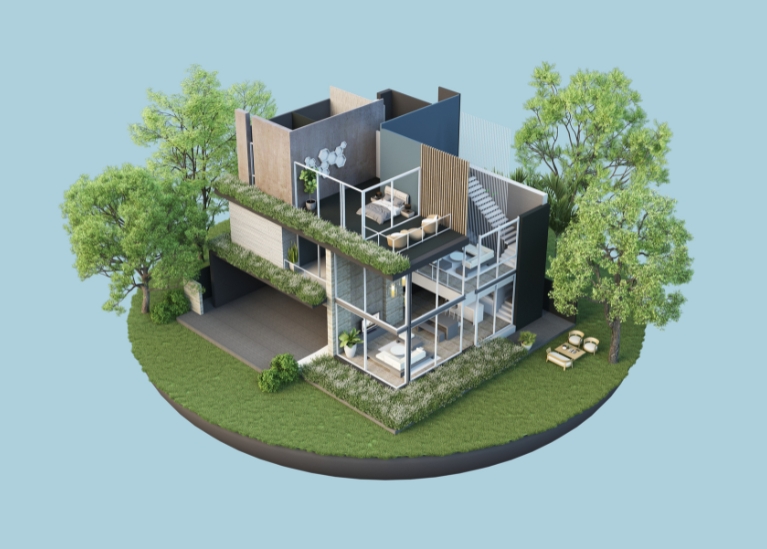
Perhaps the most surprising application of Nano Banana extends beyond simple photo editing into the professional realm of architecture and urban design. The AI model can generate detailed 3D architecture models from single images—even screenshots from Google Street View—in approximately 13 seconds.
Architects and landscape designers can upload photographs and receive high-fidelity 3D building models rendered from multiple perspectives (front, side, 45-degree angles) and in various styles including 3D-printed models, blueprints, vector drawings, or hand sketches. For enhanced accuracy, professionals can upload two images—a street view for the facade and an aerial shot for the roof—enabling comprehensive model generation.
This functionality addresses a persistent challenge in architectural workflows: obtaining accurate existing building drawings. Nano Banana offers a fast, free solution for capturing building massing and details, making it invaluable for early concept design and urban analysis.
Available to Everyone, From Consumers to Enterprises Google has made Nano Banana widely accessible through multiple channels:
Gemini app: Available to both free and paid users globally
Developer platforms: Accessible via Gemini API, Google AI Studio, and Vertex AI for enterprises
Pricing: Set at $30 per million output tokens, with each image costing approximately $0.039 to generate
The tool's simple interface requires users to merely upload a photo and provide a text prompt describing the desired changes. The AI then executes the transformations in seconds, making professional-level editing accessible to users without technical expertise or expensive software .
As with any powerful image manipulation technology, Nano Banana raises legitimate concerns about potential misuse for deepfakes and misinformation. Google has implemented multiple safeguards to address these concerns:
Visible watermarks: All AI-generated images carry clear indicators of their artificial origin
Invisible SynthID digital watermarks: Embedded digital signatures that persist even if visible watermarks are removed
Transparency measures: Google has openly reported to authorities about AI misuse complaints, demonstrating a commitment to responsible deployment
Despite these measures, experts acknowledge that no system is foolproof. The visible watermarks can be cropped out, and the invisible SynthID tags are not yet easily detectable by the public, highlighting the ongoing challenge of preventing malicious use.
Is This the End of Photoshop? Early reactions from users and professionals suggest Nano Banana could disrupt traditional image editing markets. Many have compared the technology to "Photoshop on fast-forward"—combining fun, impressive results with a hint of unease about how easily reality can be reshaped. The technology particularly excels at tasks that previously required significant manual effort in professional editing software:
Product placement: Seamlessly integrating products into scenes with perfect lighting and shadows
Background replacement: Altering environments while maintaining subject consistency
Style transfer: Applying artistic styles to photographs without distorting key elements
Expression editing: Modifying facial expressions while keeping features recognizable
Social media has been flooded with examples showcasing these capabilities, including convincing celebrity selfies with people who have never met, historical figures reimagined in modern settings, and fantastic scenarios rendered with photorealistic quality.


Google's Nano Banana represents more than just incremental improvement in image editing—it signals a broader shift toward accessible, prompt-based creativity that could transform multiple industries from architecture to marketing to entertainment. As AI systems become increasingly capable of understanding and executing complex visual instructions, the barrier between imagination and realization continues to dissolve. This democratization of creative tools empowers new voices while simultaneously challenging our relationship with visual media and reality itself. The technology continues to evolve, with Google already working on additional enhancements and applications. What remains clear is that Nano Banana has set a new standard for AI-assisted image editing—one that balances impressive capability with thoughtful consideration of ethical implications . For now, users worldwide can experiment with this transformative technology through the Gemini app, discovering new applications and pushing the boundaries of what's possible with AI-enhanced creativity. As Sundar Pichai demonstrated with his transformed dog photos, the results can be playful, impressive, and sometimes unsettling—all at the same time. As we move forward into an increasingly AI-augmented world, tools like Nano Banana will continue to spark important conversations about creativity, authenticity, and responsibility in the digital age
