Ditch the Headaches! How to Build Business Platforms That Are Actually Easy & Clever

Written by
admin

Get the oars in the water and start rowing. Execution is the single biggest factor in achievement so the faster and better your execution.
Ditch the Headaches! How to Build Business Platforms That Are Actually Easy & Clever
admin
Let’s face it: many business tools feel like trying to assemble furniture
with instructions written in another language. Confusing, frustrating,
and you just want to give up! But what if the software you use every day
felt simple, helpful, and maybe even… smart?
That’s the goal of designing simple & smart business platforms. It’s not
about fancy buzzwords; it’s about making your work life smoother and
getting better results. Here’s why it matters and how it’s done:
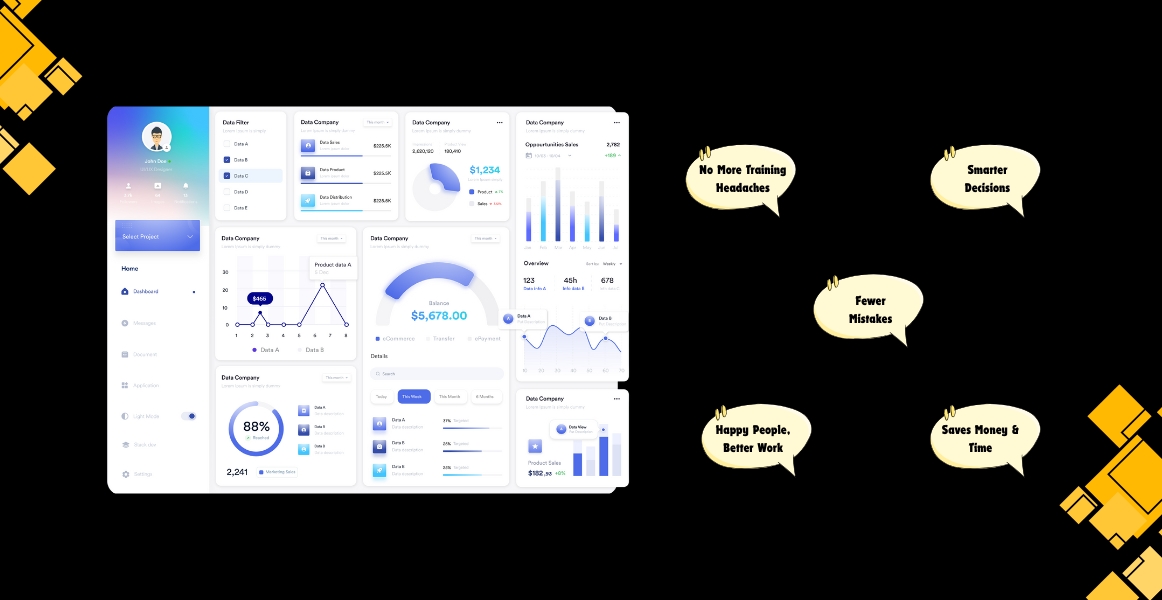
 No More Training Headaches: If a platform is truly simple,
people figure it out fast. Less time spent learning means more
time doing.
Fewer Mistakes: Confusing systems lead to errors. Simple steps
and clear information mean things get done right the first time.
Happy
People, Better Work: Frustrated users are unproductive users. A
platform that’s easy and helpful makes everyone happier and more
engaged.
Saves
Money & Time: Less training, fewer errors, faster work? That all
adds up to significant savings.
Smarter Decisions: "Smart" means the platform helps
you work better, not the other way around.
Clean & Clear: Think big buttons, simple words, not too much
clutter. Like a well-organized kitchen – you know exactly
where everything is.
Does One Thing Well: Instead of a confusing
"do-it-all" monster, it focuses on its core job perfectly.
Predictable: Buttons and menus are where you
expect them. It works the same way every time.
Help When You Need It: Easy-to-find help
articles, tooltips, or even friendly chat support – not
buried manuals.
Works on Your Phone Too: Because work doesn't
only happen at a desk!
No More Training Headaches: If a platform is truly simple,
people figure it out fast. Less time spent learning means more
time doing.
Fewer Mistakes: Confusing systems lead to errors. Simple steps
and clear information mean things get done right the first time.
Happy
People, Better Work: Frustrated users are unproductive users. A
platform that’s easy and helpful makes everyone happier and more
engaged.
Saves
Money & Time: Less training, fewer errors, faster work? That all
adds up to significant savings.
Smarter Decisions: "Smart" means the platform helps
you work better, not the other way around.
Clean & Clear: Think big buttons, simple words, not too much
clutter. Like a well-organized kitchen – you know exactly
where everything is.
Does One Thing Well: Instead of a confusing
"do-it-all" monster, it focuses on its core job perfectly.
Predictable: Buttons and menus are where you
expect them. It works the same way every time.
Help When You Need It: Easy-to-find help
articles, tooltips, or even friendly chat support – not
buried manuals.
Works on Your Phone Too: Because work doesn't
only happen at a desk!

 Remembers You: It saves your preferences or frequent
actions, so you don't have to start from scratch.
Does the Boring Stuff: Automatically sends invoices, reminds you
of deadlines, or updates stock levels? Yes, please!
Shows What Matters: Instead of walls of data, it highlights key
numbers or alerts you to important changes. Think "traffic
light" signals for your business health.
Connects Easily: Plays nicely with other tools you use (like
your email or calendar), so information flows smoothly.
Learns (a little): Maybe it suggests the next step based on what
you usually do, or flags potential problems.
Remembers You: It saves your preferences or frequent
actions, so you don't have to start from scratch.
Does the Boring Stuff: Automatically sends invoices, reminds you
of deadlines, or updates stock levels? Yes, please!
Shows What Matters: Instead of walls of data, it highlights key
numbers or alerts you to important changes. Think "traffic
light" signals for your business health.
Connects Easily: Plays nicely with other tools you use (like
your email or calendar), so information flows smoothly.
Learns (a little): Maybe it suggests the next step based on what
you usually do, or flags potential problems.
Designers building these platforms focus on real people
Listen First: They talk to the people who will use the platform.
What’s frustrating? What takes too long? What do they wish it
could do?
Cut
the Clutter: They ruthlessly remove anything unnecessary. Every
button, every field, must earn its place.
Use Plain Language: No jargon! "Submit Order" is better than
"Initiate Fulfillment Process."
Guide the User: Clear instructions, helpful hints, and logical
steps that feel natural.
Automate Wisely: They look for repetitive, time-consuming tasks
that a computer can handle reliably, freeing up humans for more
important things.
Show, Don't Just Tell: Using clear visuals like charts, icons,
and progress bars makes complex information easy to digest.
Test & Improve: They watch real people try using early versions
and keep making it better based on what works (and what
doesn’t!).
Invoicing: Simple: Fill in client, amount, click "Send." Smart:
Reminds you about unpaid invoices, lets the client pay online
instantly.
Project Management: Simple: See all your tasks in one
clear list. Smart: Shows you if a deadline is at risk,
automatically assigns tasks based on who's free.
Inventory: Simple: Scan a barcode to see how much stock is left.
Smart: Predicts when you’ll run out and suggests ordering more,
or flags slow-moving items.
Simple and smart business platforms aren't a luxury; they're essential. They reduce stress, save time and money, help avoid mistakes, and let you focus on what really matters – growing your business and serving your customers.

Next time you're frustrated with a clunky tool, ask: Could this be simpler? Could this be smarter? The best platforms feel almost invisible – they just help you get your job done, effortlessly and effectively. That’s the power of good design!
