What is Agentic AI?
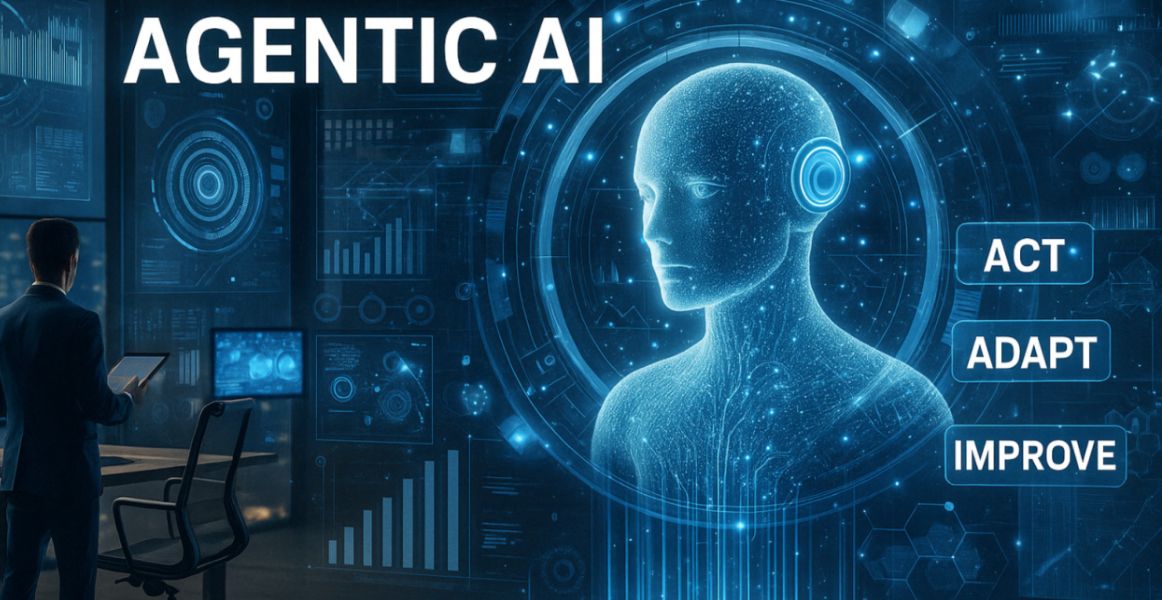
Agentic AI is a new generation of artificial intelligence that does more than answer questions or provide outputs. Unlike traditional chatbots, it can act on instructions, use digital tools, and complete multistep tasks autonomously. Built on large language models (LLMs), agentic AI works like a virtual coworker able to plan, execute, and adapt its work in real time.
Use Cases of Agentic AI
1. Automation
Agentic AI streamlines repetitive and complex processes:
- Software development: Writing, testing, and deploying code from natural-language instructions.
- Research and reporting: Searching large data sets, analyzing information, and producing reports.
- Business processes: Drafting documents, processing forms, and orchestrating back-office workflows.
2. Customer Service
Agentic AI improves customer interactions by integrating directly with enterprise systems:
- Handling product queries, orders, and returns.
- Managing support tickets and follow-ups without human help.
- Offering round-the-clock multilingual support, reducing wait times and costs.
3. Operations
Organizations are using agentic AI to optimize day-to-day business functions:
- Cybersecurity: Detecting and responding to threats in real time.
- Sales operations: Qualifying leads, scheduling meetings, and sending follow-up communications.
- Banking and finance: Automating credit, compliance, and documentation tasks.
Benefits of Agentic AI
- Efficiency: Automates repetitive work, boosting productivity.
- Adaptability: Handles unpredictable tasks beyond rule-based systems.
- Ease of use: Can be directed in plain language.
- Scalability: Executes multiple processes at once.
- Transparency: Generates work plans that humans can review and adjust.
Risks of Agentic AI
- Errors and reliability: Autonomous decision-making can lead to mistakes with significant consequences.
- Security and data: Heightened risks in financial, operational, or other sensitive domains.
- Governance: Challenges in accountability, liability, and establishing proper oversight frameworks.
- Workforce disruption: Automation of routine roles may affect employment structures.
- Over-reliance: Dependence on AI without sufficient human oversight can increase vulnerabilities.
In essence, agentic AI represents a shift from AI as a tool to AI as a digital teammate. Its promise lies in efficiency and flexibility, but businesses must balance adoption with safeguards around trust, governance, and workforce impact.